
Joseph Nonga Presentation in Cameroon Conference
- Jul
- 12
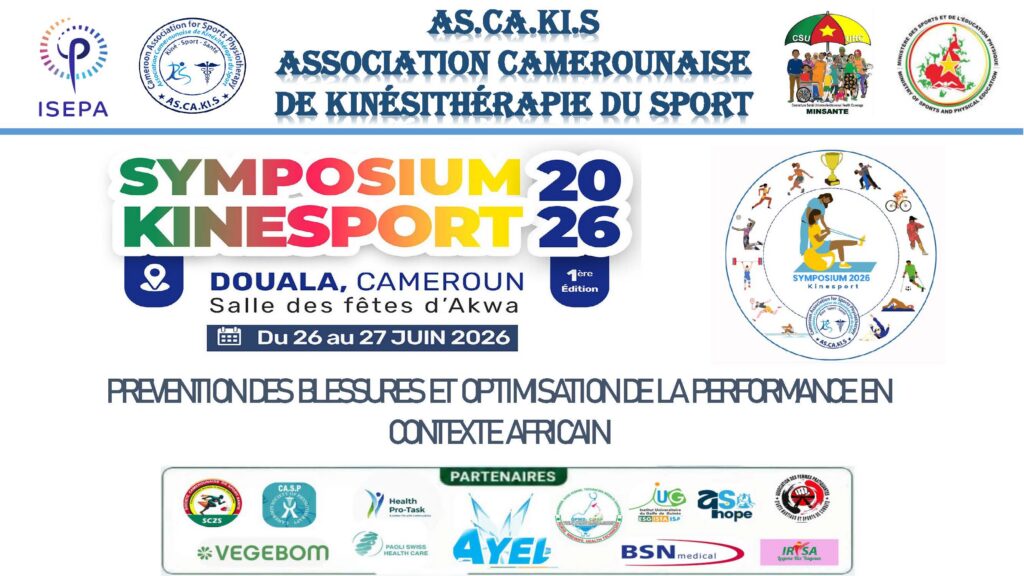
Power Point Slides (in French) Presentation NONGA symposium
Presentation Notes — BESUA, From the Arena to the Mat
Theme and Speaker Introduction:
I am Joseph Blaise NONGA NONGA, Senior Physical Education and Sports Teacher, High-Level Wrestling Coach, Secretary General of African Association for Traditional Games and Sports, and INWR Consulate Personnel in Cameroon. My presentation focuses on Besua, a traditional wrestling style from the Littoral region, examined through three lenses: strategic, medical, and cultural.
Outline: We will cover five main sections.
- First, the mythical origins of Besua.
- Then its foundational rules.
- Next, an analysis of injuries linked to its practice.
- We will see how this sport moves from legend to a pressing medical reality.
- And finally, how to modernize it without betraying its identity.
The Founding Legend
Besua was born from a confrontation between Malobe Etame, a tyrannical giant from the Pongo tribe who relied solely on brute force, and Ngomninga son of Epokpa, a small-framed fighter who had prepared for 18 days of spiritual retreat in the forests of Bwan Bakoko and Yansoki. The small Ngomninga defeated the giant without shedding blood. This founding episode established Sawa wrestling as a peaceful alternative to war between communities.
Rules of Beshua
Two key points to bear in mind. To win, the bout must begin with the Panga (a clinch ordered by the referee) and end by bringing the opponent down: buttocks, sides, abdomen, knees, or head touching the sand validates the victory.
Strictly forbidden are punching, grabbing the tissue, contact with the genitals, and the use of oil or gris-gris. This regulatory framework establishes a strong fighting ethic.
Combat Biomechanics:
All actions in Besua take place standing. The objective is to completely unbalance the opponent around a rotation axis. Three key techniques: arm grabs with projection, hip throws and the Supplex, which involves lifting and driving the opponent into the ground. These throws generate a shockwave that the sand cannot fully absorb, with direct consequences on the cervical spine, shoulders, and knees.
Traumatological Data
The figures speak for themselves. The lower limbs account for 55.7% of injuries, mainly through overloading of foot strikes and unstable supports. The knees represent 25.2% of cases, with frequent medial collateral ligament sprains caused by torsional forces. Legs and ankles total 30.5% of osteoarticular lesions. The trunk and spine are affected in 24.8% of cases, with cervical and lumbar pain from compression. The upper body and head account for 19.5% of cases. Clinical summary: more than one injured athlete in two — 52.6% — retains lasting sequelae, and the median recovery time reaches 21 days.
The Overtraining: This is the most main cause of injuries in our context. The athlete trains without structured supervision. With no medical staff, no one detects the warning signs. Overtraining sets in and exceeds the body’s tissue regeneration capacity. Biomechanical fatigue follows ligaments and bones lose their elasticity and resistance. The logical outcome is rupture or serious injury — fracture, dislocation, tear — often occurring right before competition.
From Legend to Medical Emergency
This slide illustrates the gap between what Besua represents culturally and what it demands medically. On the left, a strong heritage: the legend of Ngomninga, the Panga code, the prohibitions of the arena. On the right, a severe clinical reality: 52.6% of athletes retain sequelae, significant biomechanical risks from the Supplex, and a chronic absence of medical supervision that cuts careers short prematurely.
Toward a Modern Medical Protocol:
- A change of approach is essential. Across four dimensions compared side by side, the observation is consistent:
- where tradition relies on marabouts and amulets, medicine offers structured mental preparation. Where pain is ignored through gris-gris, preventive osteopathy releases tension and corrects imbalances.
- The warm-up to the sound of tam-tams (Bilimbi) gives way to targeted joint mobilization and strengthening protocols.
- Finally, the open-ended bout fought to exhaustion is replaced by regulated time limits and five weight categories to prevent extreme fatigue injuries.
Without Loss of Identity:
- The model I advocate rests on three interacting pillars.
- Cultural heritage: the sand arena, the Sawa identity, intergenerational transmission.
- Medical science: prevention, osteopathy, integration of qualified sports medicine staff.
International administration: integration into UWW, creation of weight categories, opening to mixed-gender competition.
At the intersection of these three circles lies the future of African wrestling — a professionalized sport that protects physical integrity while exporting its culture to the world stage.
Conclusion:
Know our roots, protect our champions. The sand arena and the regulation mat are not opposed — they are two sides of the same ambition. The future of Besua, and of African wrestling as a whole, depends on a deeper understanding of our culture and on the firm commitment to medicalize and structure our competitions. Only on these terms will African wrestling conquer the world stage.